Choose one audience and one next step
A founder discovering your product and an existing user learning a feature need different introductions. Write down who the video is for, what they already know and what they should do next. A homepage film might lead to a demo; an onboarding sequence might lead to completing a task.
Try this sentence: ‘For [audience] who struggle with [problem], show how [workflow] helps them achieve [outcome], then invite them to [action].’ Keep outcomes factual. If you cannot support a performance claim, show what the product does instead.
Map the workflow before listing features
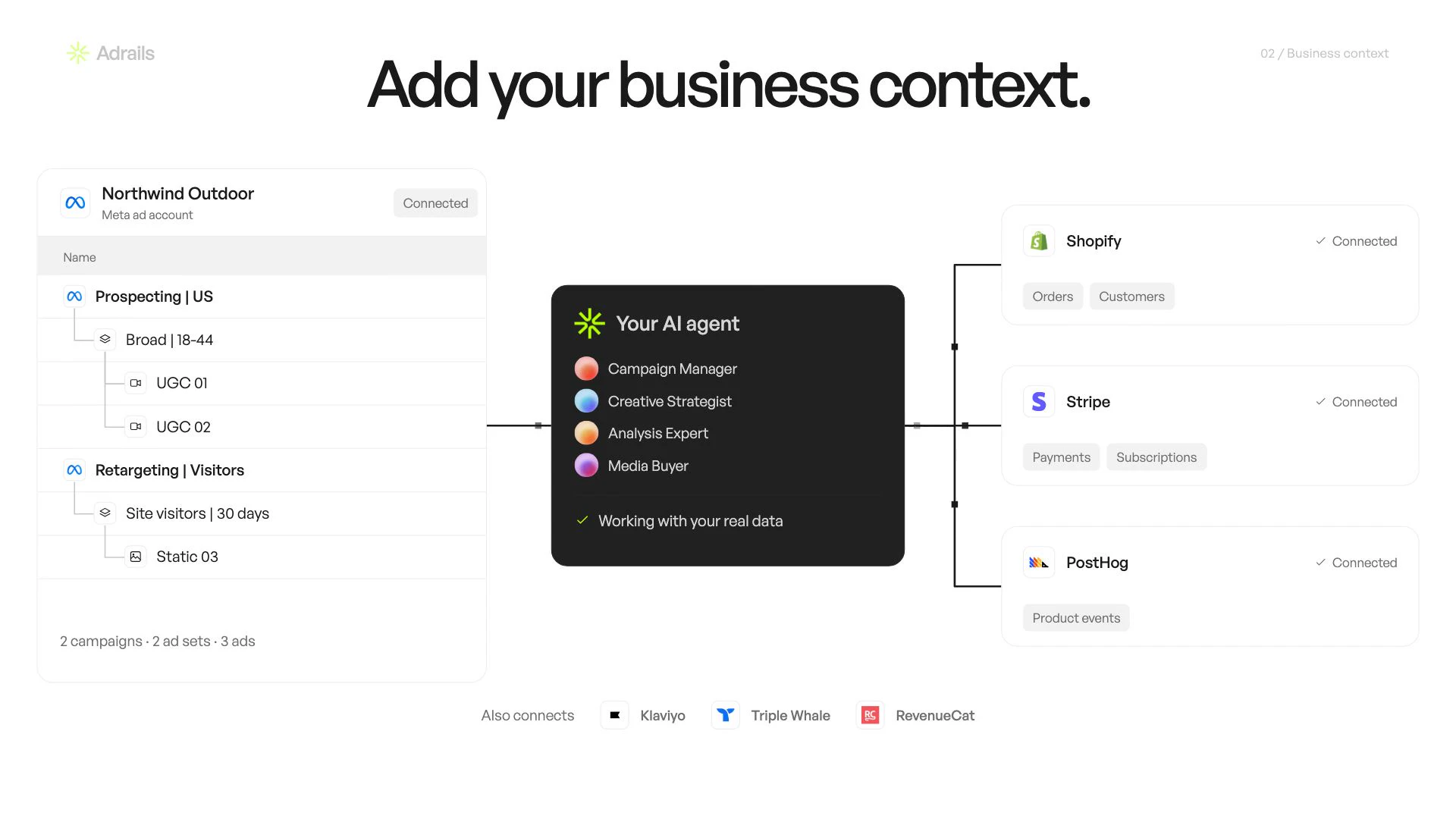
Build a short sequence with a starting point, a useful action and a visible result. For example, the Adrails film moves through campaign creation and performance analysis. The interface serves the story because the viewer can see what each step is for.
Choose only the screens needed to explain that sequence. A menu, dashboard or settings page should earn its place. If two features require different explanations, consider separate films instead of forcing both into the same script.
Prepare the screens and the claims
Share current interface files or clean screenshots, your brand guidelines, existing copy and a short product walkthrough. Mark screens that are still changing. Replace private customer information with approved demo content before sharing assets.
Confirm product names, labels and any statements about results before animation starts. Reviewing the script and storyboard is the moment to fix the explanation; moving that decision to the finished film means revisiting more work.
Plan each format as a composition
A wide dashboard that reads in 16:9 may become too small in a portrait crop. Decide which interface detail matters in each shot, then compose the 9:16 version around it. Give text enough space and check it on a phone.
Adrails has 46-second landscape and vertical presentations. Relay uses a different approach: a short introduction, a longer VSL and a vertical ad. Those examples show two separate decisions: changing the frame and changing how much of the story you tell.
Bring this checklist to the first call
- Primary audience and intended next action
- One product workflow and the screens it needs
- Approved brand files, product copy and demo data
- Voiceover language and pronunciation notes
- Required durations, aspect ratios and placements
- Launch date and one person to consolidate feedback
At MO STUDIO, script, voice, design and animation are included in our offers, with 16:9 and 9:16 delivery. The brief helps us choose the right scope and agree the production schedule with you.